
Table of Contents
Introduction
How to get your first tech job without years of experience is a question many graduates and beginners ask when starting a career in technology. While many employers require previous experience, developing the right skills, building practical projects, and creating a strong portfolio can help you become a competitive candidate for local and international opportunities.
How to get your first tech job when you’re looking for tech jobs without experience can open the door to remote tech jobs in Europe, especially when you have the right skills, practical projects, and a strong portfolio. For many graduates, students, and career starters, entering the technology industry can seem difficult because most job advertisements ask for previous experience. This often leaves beginners wondering how they can gain experience when companies are not willing to give them their first opportunity.
The good news is that your career does not have to begin with years of professional experience. In today’s digital economy, employers can also look at your practical skills, projects, problem-solving ability, communication, and willingness to learn. Instead of waiting until you have several years of experience, you can start by developing skills that solve real problems and creating evidence of what you can do.
Technology has also created opportunities that are not limited to your immediate location. Depending on the employer, employment arrangement, location requirements, and work eligibility, some professionals can work remotely with companies outside their country. This has made international opportunities more accessible to skilled people around the world.
However, getting a remote job with a European company is not as simple as learning one programming language and sending applications. Competition can be strong, and companies have different requirements. The goal should therefore not be to chase a foreign job immediately, but to become skilled enough and prepared enough to compete for opportunities wherever they exist.
The Experience Trap
One of the biggest challenges beginners face is the “experience trap.”
A job advertisement may say:
“2 years of experience required.”
A beginner sees this and decides not to apply.
But not every entry-level opportunity requires several years of professional employment. Some employers are willing to consider candidates who can demonstrate relevant skills through projects, internships, freelance work, training, or other practical experience.
The important thing is to understand the difference between having no experience and having no evidence of your ability.
If you have never worked for a technology company, you may not have professional experience yet. But you can still have practical experience.
You can build a website.
You can create an application.
You can analyse a dataset.
You can design a user interface.
You can build a database.
You can complete a cybersecurity laboratory exercise.
You can contribute to a project.
These activities can become part of your portfolio and help demonstrate your ability.
Not necessarily.
What you need is the right skill, practical experience, and the ability to prove what you can do.
🔥 A Simple Case Study

Consider a fictional example of Daniel, a young graduate from Nigeria who wants to become a software developer.
Daniel has completed his education but has never worked for a technology company. When he searches for jobs, he sees vacancies requiring experience, and he initially becomes discouraged.
Instead of giving up, Daniel changes his approach.
He chooses software development as his career path and begins learning the fundamentals. Rather than spending all his time watching tutorials, he starts building projects alongside his learning.
His first project is a responsive website for a small business.
His second project is a simple online booking system.
His third project is a basic e-commerce application.
His fourth project solves a practical problem and allows users to interact with information through a simple web interface.
These projects are not equivalent to five years of professional experience. However, they give Daniel something important: proof that he can learn, practise, build and solve problems.
He then creates a portfolio website where he presents his projects and explains the technologies he used.
He also creates a professional LinkedIn profile and improves his CV.
Instead of writing only:
“I am passionate about technology.”
He can now show:
“Built responsive web applications using JavaScript, APIs, databases and modern development tools.”
That difference matters.

🔥 Where Charis Intelligence Comes In
One mistake many beginners make is trying to learn everything at once. With so many areas of technology available today, it can be difficult to know where to start or which skills can lead to real opportunities.
At Charis Intelligence, we focus on practical digital and technology skills that can help individuals and businesses thrive in today’s digital world.
Our areas of expertise include:
- Software Engineering – Learn how to design, build, test, and maintain software applications.
- Data Analysis – Develop the skills to analyse data, identify insights, and support better business decisions.
- Mobile Application Development – Learn how to create functional mobile applications for modern users.
- Web Design & Development – Build responsive, user-friendly, and professional websites for individuals and businesses.
- Web Hosting – Get reliable solutions for hosting and managing websites online.
- Search Engine Optimization (SEO) – Learn how to improve website visibility and help businesses reach more people through search engines.
- Social Media Optimization (SMO) – Develop strategies for improving brand visibility, engagement, and reach across social media platforms.
- Email Marketing – Learn how businesses can use email campaigns to communicate with customers, generate leads, and increase conversions.
Whether you are a beginner looking to start a career in tech, a student building your skills, or a business owner looking to strengthen your digital presence, Charis Intelligence provides practical solutions and training designed around today’s digital needs.
The goal is simple: learn relevant skills, practise them, and turn your knowledge into opportunities.
🔥 Learn Practical Skills
Learning technology should go beyond memorising definitions.
If you are learning software development, for example, don’t only memorise programming syntax. Learn how to use that knowledge to create something.
If you’re learning data analysis, don’t stop at learning Excel or SQL commands. Work with actual datasets and practise finding useful information from them.
If you’re learning UI/UX design, don’t only learn design principles. Create interfaces and understand how users interact with them.
Employers want people who can apply knowledge to solve problems.
This is why practical training can be valuable for beginners.
🔥 Build Projects
Projects are one of the strongest ways for beginners to demonstrate practical ability.
Your project does not have to be revolutionary.
It simply needs to show what you can do.
For example, a beginner software developer could build:
- A school management system
- An online voting system
- A booking platform
- A small e-commerce website
- A personal portfolio
- A task management application
A data analyst could work on:
- Sales analysis
- Customer behaviour analysis
- Business dashboards
- Financial data analysis
- Student performance analysis
The important thing is to explain the problem, process and result.
🔥 Build a Professional Portfolio
Your portfolio is your opportunity to introduce your skills before an employer speaks to you.
A good portfolio can include:
- A short professional introduction
- Your technical skills
- Your best projects
- Project descriptions
- Screenshots
- Links to live projects
- Your GitHub profile
- Your CV
- Contact information
Don’t put every unfinished project online.
Choose your strongest work.
Three well-presented projects can make a better impression than twenty incomplete projects.
🔥 Improve your CV
Your CV should not simply list the courses you have taken.
Show what you have done.
Instead of:
“Completed JavaScript training.”
You could write:
“Developed responsive web applications using JavaScript and integrated APIs to provide dynamic functionality.”
Instead of:
“Learnt data analysis.”
You could write:
“Analysed sales data and created an interactive dashboard to identify trends and performance patterns.”
The second approach focuses on practical ability.
🔥Use LinkedIn and Professional Networks
LinkedIn can be useful for discovering technology companies, recruiters, professionals and job opportunities.
Your profile should clearly communicate:
Who you are + what you do + what skills you have.
You can also follow companies you’re interested in, engage with technology-related content and connect professionally with people in your industry.
Networking doesn’t mean begging people for jobs.
It means building genuine professional relationships and learning about opportunities.
🔥Understand Remote Jobs in Europe
Working remotely for a European company can be an attractive goal, but beginners need realistic expectations.
“Remote” does not always mean “work from anywhere in the world.”
A company may advertise a position as remote but limit applicants to certain countries.
Another company may require the employee to be legally authorised to work in a specific country.
Some companies may hire international workers through contractors or employment platforms, while others may not.
Therefore, always read the job description carefully.
Before applying, check:
- Where the company allows employees to work from
- Whether international applicants are accepted
- Time-zone requirements
- Employment or contractor arrangements
- Required technical skills
- Experience requirements
This prevents you from wasting time applying for opportunities that you are not eligible for.
🔥Don’t Ignore Local Opportunities
An international career does not necessarily begin with an international company.
Your first experience could come from a Nigerian company, internship, startup, small business or freelance client.
Suppose you build a website for a business in Sagamu.
That may be your first real client project.
You can document the project, explain your responsibilities and include it in your portfolio.
Later, when applying internationally, you can demonstrate that you have already worked on a real business problem.
Your first opportunity doesn’t have to be your final destination.
🔥Prepare for Interviews
Getting an interview is only one part of the process.
You also need to be able to explain your skills.
An interviewer may ask:
“Tell me about a project you worked on.”
Don’t simply say:
“I built a website.”
Explain:
- What problem you were solving
- What technology you used
- What your role was
- What challenges you encountered
- How you solved them
- What you learned
For example:
“I developed an online booking application to help users schedule appointments. I used JavaScript for the application logic and created a simple database structure to manage bookings. One challenge was preventing duplicate bookings, so I added validation to the booking process.”
This type of answer demonstrates practical thinking.
🔥What Employers Are Really Looking For
While technical skills are important, employers often look beyond technical knowledge.
They may also consider:
Problem-solving
Can you identify a problem and work toward a solution?
Communication
Can you explain your ideas clearly?
Teamwork
Can you work effectively with other people?
Adaptability
Can you learn new tools when necessary?
Reliability
Can you complete tasks and meet deadlines?
Willingness to learn
Technology changes quickly, so continuous learning is essential.
A candidate who has technical skills but cannot communicate or work with others may struggle in a professional environment.
🔥How Charis Intelligence Can Help
For someone who wants to enter the technology industry, knowing what to learn can be just as difficult as learning the skill itself.
This is where Charis Intelligence comes in.
Charis Intelligence is a technology company committed to providing practical, career-focused technology education for people who want to develop relevant digital skills.
Rather than focusing only on theory, Charis Intelligence aims to help learners understand how technology can be applied to real-world problems.
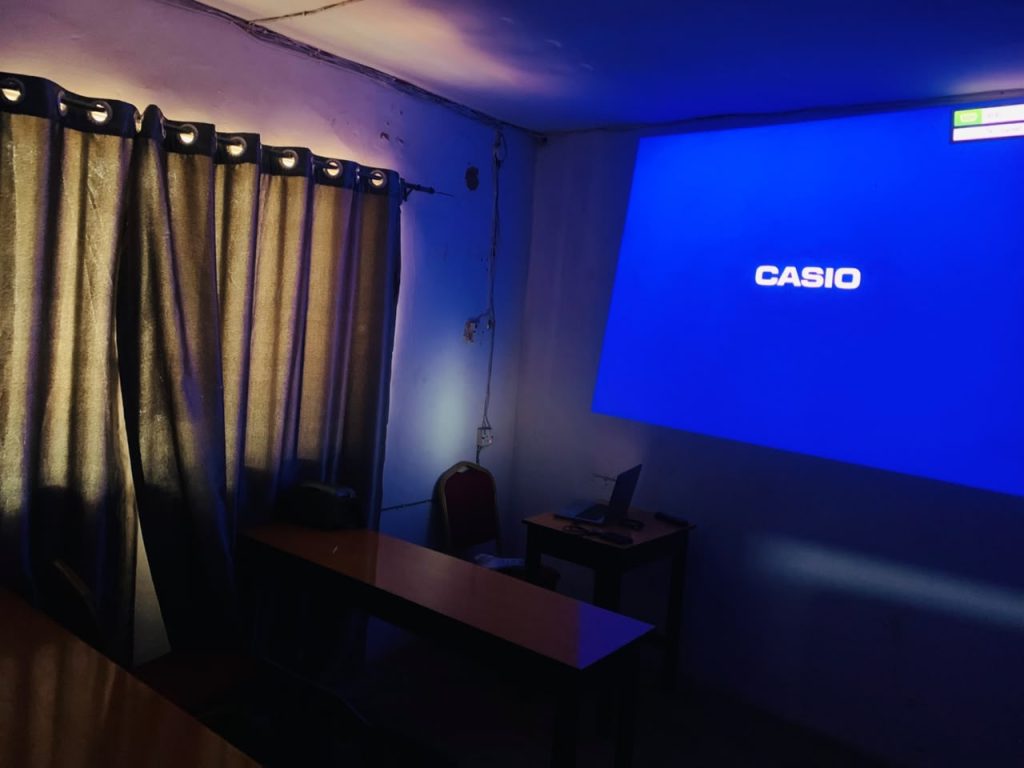
Its training environment provides learners with an opportunity to develop practical knowledge, work on projects, improve their confidence and prepare for opportunities in the technology industry.
Whether you are a student, graduate, beginner, career changer or someone looking to upgrade your existing skills, having structured guidance can make your learning journey easier and more focused.
The goal is not simply to collect certificates.
The goal is to develop skills you can use.
Start your tech journey with Charis Intelligence today. Visit our training section of our website
Your First Tech Job Is Only the Beginning
Getting your first technology job may take time.
You may apply to several companies before receiving an interview.
You may attend interviews and get rejected.
You may need to improve your portfolio more than once.
That’s normal.
The important thing is to keep improving.
Your journey can look like this:
Learn → Practise → Build → Showcase → Apply → Interview → Improve → Grow.
You don’t need to pretend that you have years of experience.
Instead, demonstrate what you have learned and what you can actually do.
The technology industry is constantly changing, and new opportunities continue to emerge. The European Union, for example, continues to invest in digital transformation and the development of digital skills, highlighting the importance of technology professionals to Europe’s future economy.
This makes developing relevant digital skills a worthwhile investment for anyone interested in building a modern career.
Final Thoughts
The question shouldn’t only be:
“How can I get a tech job without experience?”
A better question is:
“What can I do today to become the kind of candidate an employer wants to hire?”
Start with one skill.
Learn it properly.
Build practical projects.
Create a portfolio.
Improve your CV.
Develop your communication skills.
Network with professionals.
Apply for suitable opportunities.
And keep learning.
You may start your journey in Nigeria, but the skills you develop can potentially create opportunities beyond your immediate environment.
Your first tech job may not come immediately, and working remotely for a European company is not guaranteed. But with the right skills, preparation and persistence, you can put yourself in a much stronger position to compete for opportunities in the local and international technology market.
Ready to Start Your Tech Journey?
You don’t have to figure everything out alone.
Charis Intelligence provides practical technology training designed to help beginners and aspiring professionals develop relevant digital skills and prepare for real-world opportunities.
Whether your goal is software development, data, or another technology career, the right training can give you the structure and practical foundation to start building your future.
Don’t wait for experience before you start. Start building the experience that will help you get the opportunity.
Start your tech journey with Charis Intelligence today. Visit our training section of our website
FAQ
Can I get a tech job without years of experience?
Yes. While some positions require experience, beginners can start with internships, junior roles, freelance work, and entry-level opportunities by building relevant skills and practical projects.
What tech skills can I learn as a beginner?
Beginners can explore software development, data analysis, and other digital skills. The best choice depends on your interests and career goals.
Can I work remotely for a European company from Nigeria?
Yes, European companies offer remote opportunities to international candidates. However, eligibility varies by company, location, employment arrangement, and work requirements.
Do I need a university degree to get a tech job?
Not always. Some employers require degrees, but many technology roles also place significant emphasis on practical skills, portfolios, projects, and demonstrated ability.
📞 Call/WhatsApp: +2348137730189
📍 22 Akarigbo Road, Sagamu, Ogun State
Your productivity starts with the right training Choose 🚀Charis Intelligence.👉 Start with us today